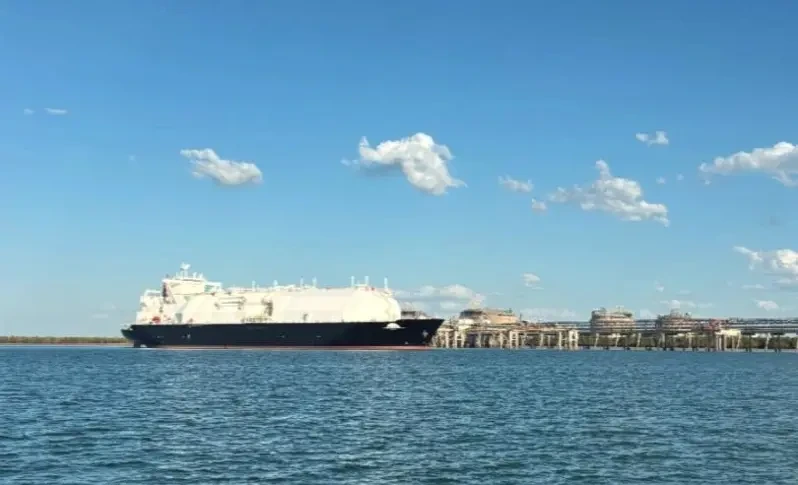
The Australian government has introduced legislation requiring liquefied natural gas (LNG) exporters to increase their domestic market supply—up to an amount equivalent to 20% of their export volume—starting in 2028. The move aims to address supply shortages and drive down prices; however, producers warn that it could discourage investment in new gas fields.
According to Bloomberg, the government and regulatory authorities will adjust the required supply volume annually based on consumption forecasts, with the goal of ensuring that total supply reaches 110% of domestic demand.
The new regulations will primarily affect three LNG facilities in Queensland. The Gladstone project, operated by Santos, is expected to be the most significantly impacted, as it frequently purchases gas from the domestic market to fulfill its export commitments.
Australia, the world’s second-largest LNG exporter—trailing only Qatar—sends approximately three-quarters of its natural gas overseas. Meanwhile, the more densely populated eastern coast of Australia is projected to face supply shortages by 2030.
Energy Minister Chris Bowen stated that these legislative reforms will boost domestic supply, strengthen energy security, and help curb prices.
Nevertheless, the government has revised and softened its initial proposal. The required supply volume can be adjusted downward based on domestic demand, existing contracts, and infrastructure constraints; furthermore, exporters may apply for a reduction if compliance would force them to breach other contractual obligations. Conversely, labor unions, manufacturers, and environmental groups have criticized the bill, arguing that it contains loopholes that will allow companies to evade their obligations to supply additional gas to Australian customers.